What is LED Light Therapy?
LED light therapy, also known as phototherapy, is a non-invasive treatment that enters the skin’s layers to improve the skin. The treatment involves using specific wavelengths of light to target various skin concerns. LED light therapy can help improve overall skin health by increasing circulation, promoting cellular turnover, and enhancing the skin’s natural healing processes.
Treatment Prices
LED Light TherapyFull Session |
£40 |
LED Light TherapyAdd Ons |
£20 |
Need help choosing?
Meet with one of our Patient Coordinators and Aestheticians for a free consultation.
Book a Free ConsultationTreatment Summary
- 1 Procedure time – 10–20 mins
- 2 Pain relief – None required
- 3 Recovery time – Same day
- 4 Results last – Months to years
What are the benefits of LED Light Therapy?
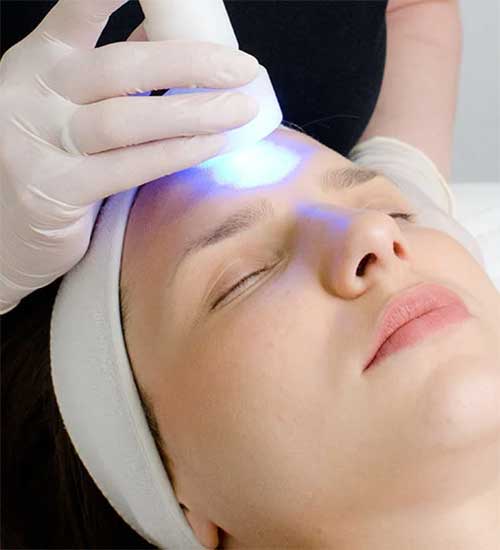
Acne treatment: Blue light (typically in the range of 415-430nm) is often used to target acne-causing bacteria on the skin, helping to reduce inflammation and prevent breakouts. It can also help regulate oil production in the skin.
Anti-ageing: Red light (around 630-700nm) stimulates collagen production in the skin, which can help improve skin texture, reduce the appearance of fine lines and wrinkles, and promote overall skin rejuvenation.
Wound healing: LED light therapy, particularly with wavelengths in the red and near-infrared range, can promote wound healing by increasing circulation and stimulating cellular repair processes in the skin.
Hyperpigmentation: Certain wavelengths of light, such as green light (around 525-550nm), can help target excess melanin production in the skin, leading to a reduction in hyperpigmentation and an even skin tone.
Rosacea and inflammation: Some studies suggest that LED light therapy, particularly with wavelengths in the yellow or amber range, can help reduce inflammation associated with conditions like rosacea and soothe sensitive skin.
LED Light Therapy treatment areas
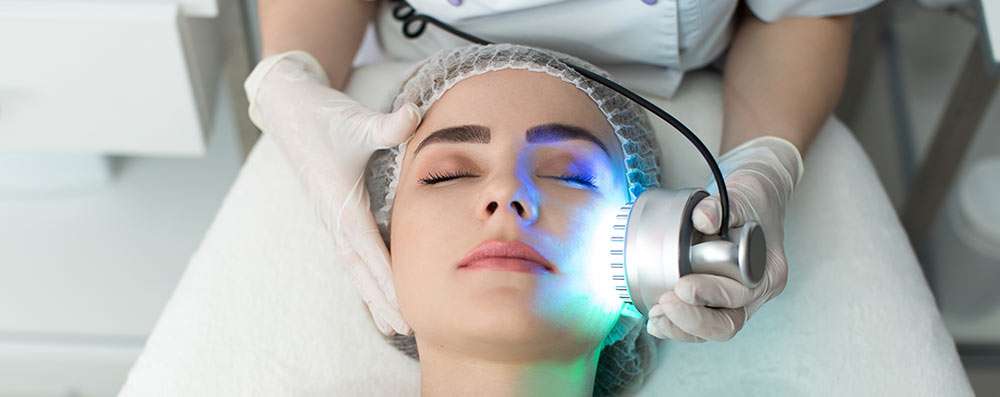
Most people get LED light therapy on their face, neck, and, but you can also get it on your hands, legs, back or other areas. LED light therapy can help with skin concerns such as eczema, mild to moderate acne, psoriasis, actinic keratosis, rosacea, sun damage and wounds.